
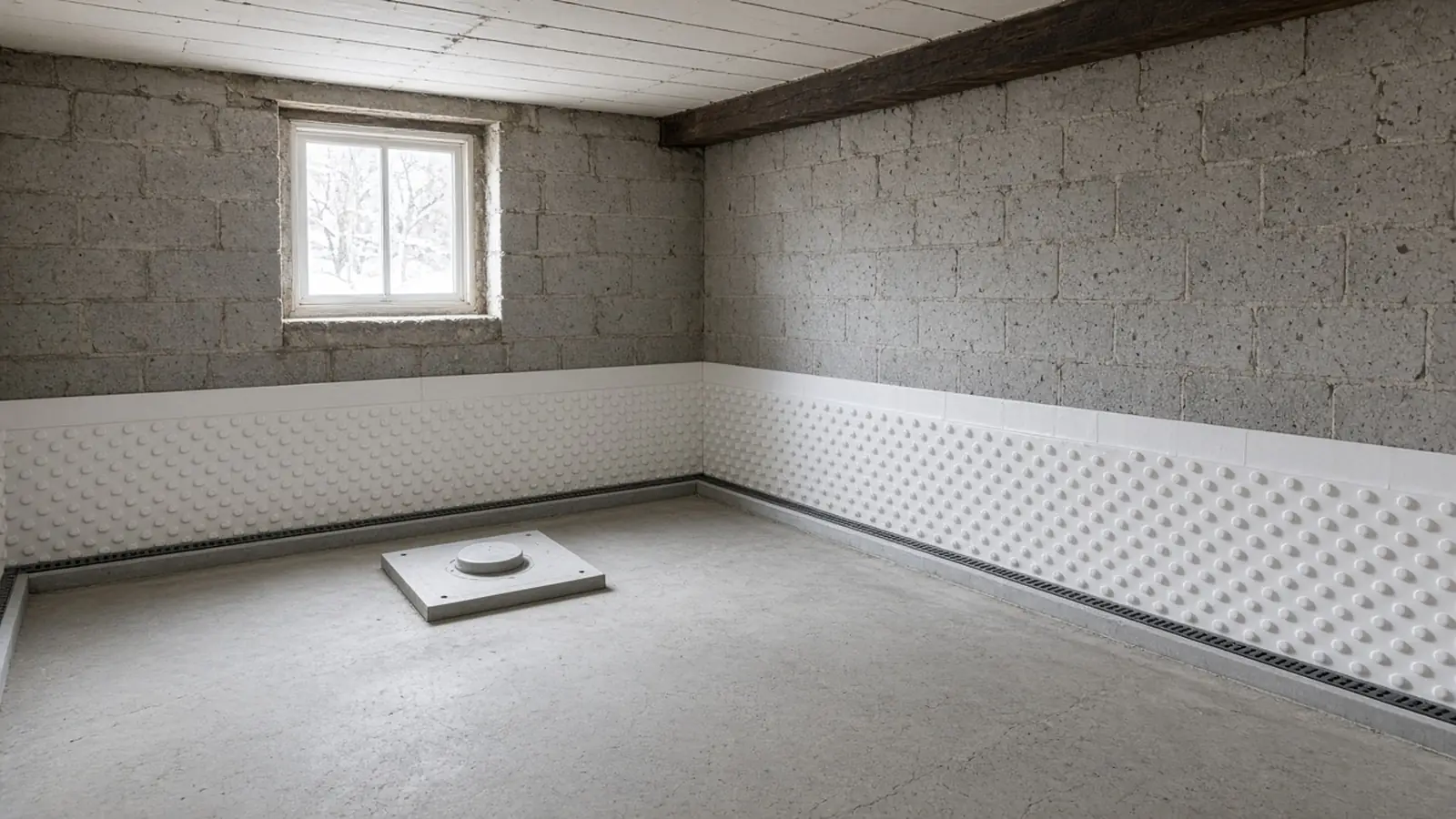
Basement waterproofing in Rochester, NY means finding where water gets into your basement, relieving the pressure that pushes it in, and giving it a controlled way out, usually through drainage, a sump pump, crack repair or exterior work. Basement Waterproofing Rochester is a free phone referral line. Call our referral line (number coming soon), tell us what you are seeing and your ZIP code, and we connect you with an independent local waterproofing contractor who serves your area.
Why do so many Rochester basements take on water?
Rochester sits between Lake Ontario and the Finger Lakes, with the Genesee River cutting straight through the city past High Falls. That geography brings two things basements hate: a lot of snow and a lot of groundwater. NOAA's 1991–2020 normals put average seasonal snowfall at the Rochester airport at about 102 inches, and the National Weather Service in Buffalo tracks the lake-effect bands that can bury one side of the county while the other stays bare. Every inch of that snow eventually melts into the soil around your foundation.
The housing stock matters too. More than half of the homes inside city limits were built before 1940, according to Census estimates, and many sit on fieldstone, brick or early concrete block foundations that were never meant to be fully dry. Walk any street off Park Avenue, near Highland Park, in the 19th Ward or in Maplewood and you will see the same thing: beautiful old houses with basements that have handled a century of freeze-thaw cycles. Newer suburban homes in towns like Greece, Henrietta and Webster usually have block or poured walls with footing drains that can clog or collapse over time.

What waterproofing services can we connect you with?
Most calls fall into one of the eight jobs below, and many basements need two or three of them together. A block-wall basement that seeps every March might need an interior drain, a new sump with a battery backup and longer downspouts; a poured-wall home might need one crack injected.
How a referral call works
- You call. Tell us where the water shows up, when it started and your ZIP code.
- We match you. We connect you with an independent local contractor that handles that type of work in your town.
- They inspect and quote. The contractor looks at the basement and gives you a written proposal.
- You decide. You compare, ask questions and choose. There is no obligation to hire anyone.
Every contractor sets its own prices, schedule and warranty, so ask about all three. New York requires a written contract for home improvement jobs over $500; the New York Attorney General's home improvement fact sheet lists what it must include, including your right to cancel within three business days.
Signs your basement needs attention
You do not need standing water to have a water problem. Watch for a dark band where the wall meets the floor, white crusty efflorescence on block or stone, rust on the bottom of the water heater or furnace, peeling paint, warped paneling, a sump that runs constantly in March, or a smell that comes back every spring. Cracks that widen, horizontal cracks in block walls and walls that lean inward are worth a call even if they are dry today.

Lake Ontario, the Genesee and high water
Homes near the lake in Charlotte, around Ontario Beach Park and along the shoreline in Irondequoit and Greece face a different kind of risk. Lake Ontario hit record levels in 2017 and again in 2019, and shoreline basements saw seepage for weeks. Along the river gorge and in low spots near creeks, groundwater can sit high well into May. In those areas a contractor will usually talk about drainage, a reliable sump with backup, and a check of your flood zone on FEMA's maps before recommending anything bigger.
Where we take calls
We connect homeowners in the City of Rochester and across Monroe County, including these towns:
See every town on the service areas page, or read our basement waterproofing blog for plain-English guides on spring leaks, sump discharge rules and choosing a contractor.
Questions homeowners ask
How much does basement waterproofing cost in Rochester, NY?
It depends on the fix. Sealing one leaking crack is a small job, while a full interior perimeter drain with a sump, or digging out the outside of a foundation, is a large one. Wall type, basement size, access, how many outlets the water needs and permit requirements all change the number. Ask each contractor for a written, itemized quote so you can compare the same scope.
Why does my Rochester basement leak in spring but not in summer?
Spring is when snowmelt and rain soak the soil around your foundation at the same time the ground is still partly frozen. Water cannot drain down, so it builds pressure against the wall and pushes through cracks, the cove joint and block cores. Short downspouts and soil that slopes toward the house make spring leaks much worse.
Is interior or exterior waterproofing better?
Neither is better for every house. Interior drainage relieves water pressure under the slab and sends it to a sump; it is less disruptive and works on most wall types. Exterior waterproofing stops water at the outside face of the wall but requires excavation. A good contractor explains why one fits your foundation, yard and budget.
Can waterproofing paint fix a wet basement?
Not when water is coming through under pressure. Coatings can help with light dampness on a sound poured wall, but on block, stone or cracked walls, water pushes the paint off and keeps coming. If you see puddles, efflorescence or a wet band at the floor line, the water needs a path out, not just a coat on top.
Do I need a permit for waterproofing work in Rochester?
Sometimes. Structural repairs, new plumbing connections and some drainage work need permits in the City of Rochester and in the surrounding towns, and each town has its own building department. Your contractor should tell you whether your job needs one and who pulls it. When in doubt, call the local building office before work starts.
Will waterproofing get rid of the musty smell?
It usually helps, because the smell comes from damp materials and humid air. Stopping liquid water is step one. Many basements also need a dehumidifier to keep relative humidity in check during humid Rochester summers, plus cleanup of any moldy cardboard, carpet or drywall. The EPA recommends keeping indoor humidity below 60 percent.