
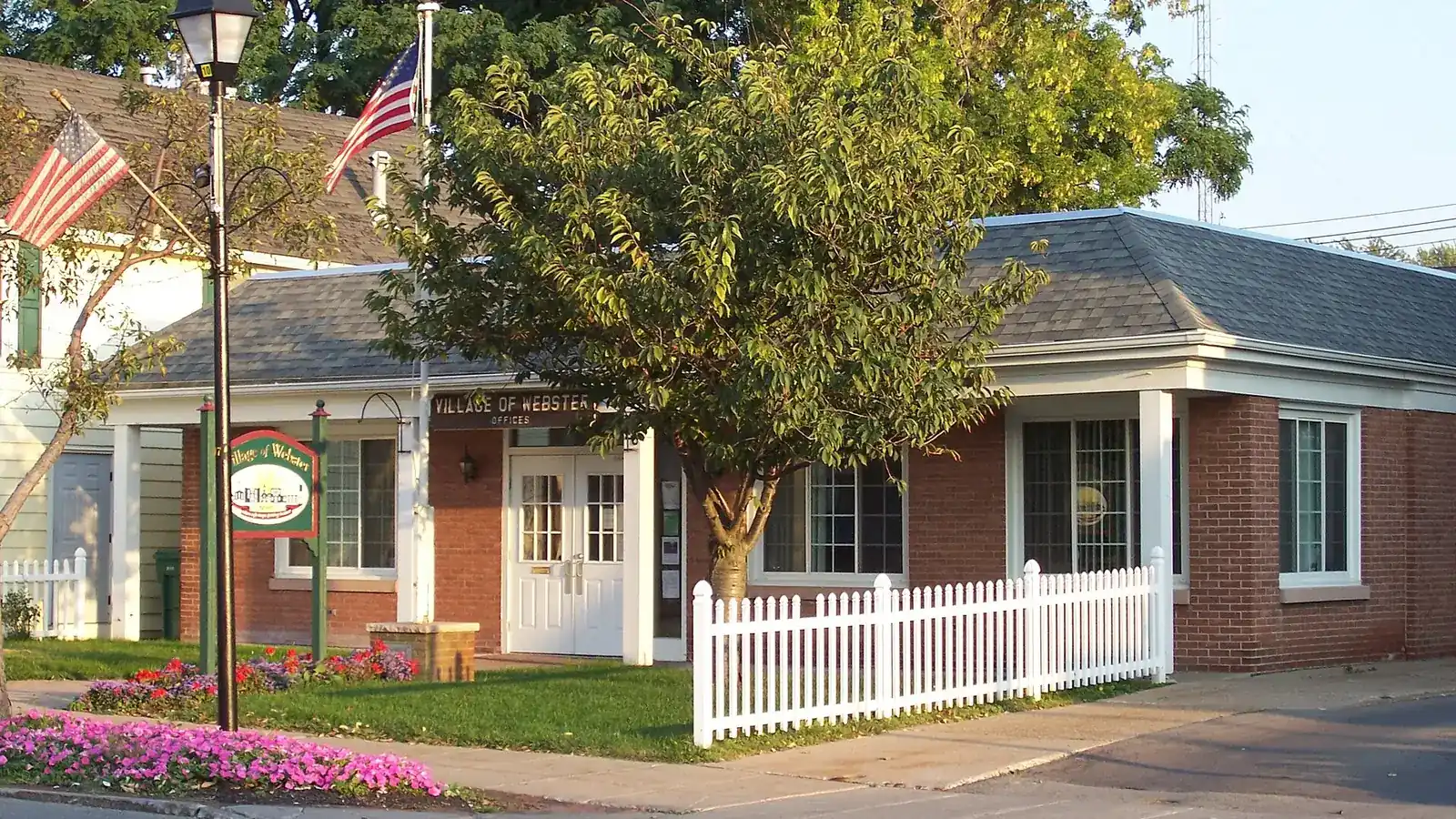
Basement waterproofing in Webster, NY covers everything from lakeshore homes near Lake Road and Webster Park, where groundwater runs high, to block-wall basements in and around the village and poured-wall basements in the newer subdivisions. Call our referral line (number coming soon) and we connect you with an independent local contractor that works in Webster.
From the lake to the village
Webster's northern edge is Lake Ontario. Webster Park, a Monroe County park near Lake Road, protects a long stretch of bluff and shoreline, and Lake Road runs past lakeshore homes and cottages from the Irondequoit Bay outlet east toward Wayne County. When the lake set record highs in 2017 and 2019, Lake Road flooded in places and the county's 2019 shoreline emergency covered the area inland to it.
South of the lake, the Village of Webster centers on Main Street, with older homes on streets around the village hall. Beyond the village, much of the town grew quickly in the last few decades, with subdivisions on former orchards and farmland on both sides of Route 104.
Different basements, different problems
Lakeshore. Homes along Lake Road and the streets that run toward the bluffs can sit close to a high water table, especially in spring. Sump pumps there may run for long periods, so pump quality, a sealed pit, a battery backup and a discharge line that does not freeze matter more than anywhere. See sump pump installation and repair.
Village and older streets. Older homes in and near the village often have block or stone foundations and clay tile footing drains. Expect seepage at the floor line in March and April, efflorescence on the walls and the occasional wet corner under a downspout. An interior perimeter drain is a common answer.
Newer subdivisions. Poured walls and builder-installed sumps are typical. Problems usually come from leaking shrinkage cracks, settled backfill that now slopes toward the house, window wells without working drains, and sump pumps that fail at the worst time. See foundation crack repair.
What to check before you call
Walk around the outside after a rain. Note where the downspouts end, whether the soil slopes toward the house anywhere, whether window wells hold water, and where the sump discharge line exits. Inside, note where the water shows up: at the floor line, along a crack, at a window or through the floor. Photos help a contractor give you a more useful first conversation.
Snow, cold and the lake
Webster gets plenty of lake-effect snow, and the plow banks along driveways and walks end up piled against foundations all winter. When that snow melts, it soaks straight down along the wall. Moving snow away from the foundation where you can, and making sure downspouts are clear and extended before the spring thaw, takes pressure off the basement at its most vulnerable time.
Orchards, lakeshore and new subdivisions
Webster was long known for its orchards and farms, and much of that land became neighborhoods over the past several decades. That history matters underground. Former farm fields often had drainage tile laid long before the houses went up, and when it is cut or crushed during construction, water that once drained away can collect against foundations. Newer homes on poured walls tend to leak at cracks, tie holes and the joint between wall and floor rather than through the wall itself.
Closer to Lake Ontario, the ground near the bluffs along Lake Road and the streets around Webster Park can stay wet well into spring, and Irondequoit Bay borders the town on the west. In the village, older homes with block and stone walls see seepage at the base of the wall during the thaw. Telling a contractor which of these describes your home helps them plan the visit before they arrive.
Permits in Webster
The Town of Webster building department handles permits for most of town, and the Village of Webster has its own code office for properties inside the village. Structural repairs and new foundation openings usually need permits. Your contractor should know which office applies.
Nearby
Across Irondequoit Bay we take calls in Irondequoit, and to the south in Penfield. See every town on our service areas page.
Questions homeowners ask
Did Lake Road in Webster flood during the 2019 high water?
Yes. When Lake Ontario reached record levels in 2019, stretches of Lake Road in Webster were posted closed due to flooding, and the county's shoreline state of emergency extended inland to Lake Road. Lakeshore homes dealt with high water, erosion and groundwater seepage.
Do newer Webster homes still get wet basements?
They can. Newer homes often have poured walls, footing drains and a sump pit, which helps, but shrinkage cracks can leak, sumps can fail or freeze, and backfill can settle so the yard slopes toward the house. Many problems in newer homes are smaller fixes like crack injection, a new pump or regrading.
How do I keep my Webster sump discharge from freezing?
Run the discharge line with a steady slope so it drains completely after each cycle, bury it below the frost line where possible, and avoid long hoses lying on the lawn. A freeze-relief fitting near the house lets water escape if the line ices up. A contractor can reroute a line that freezes every winter.