
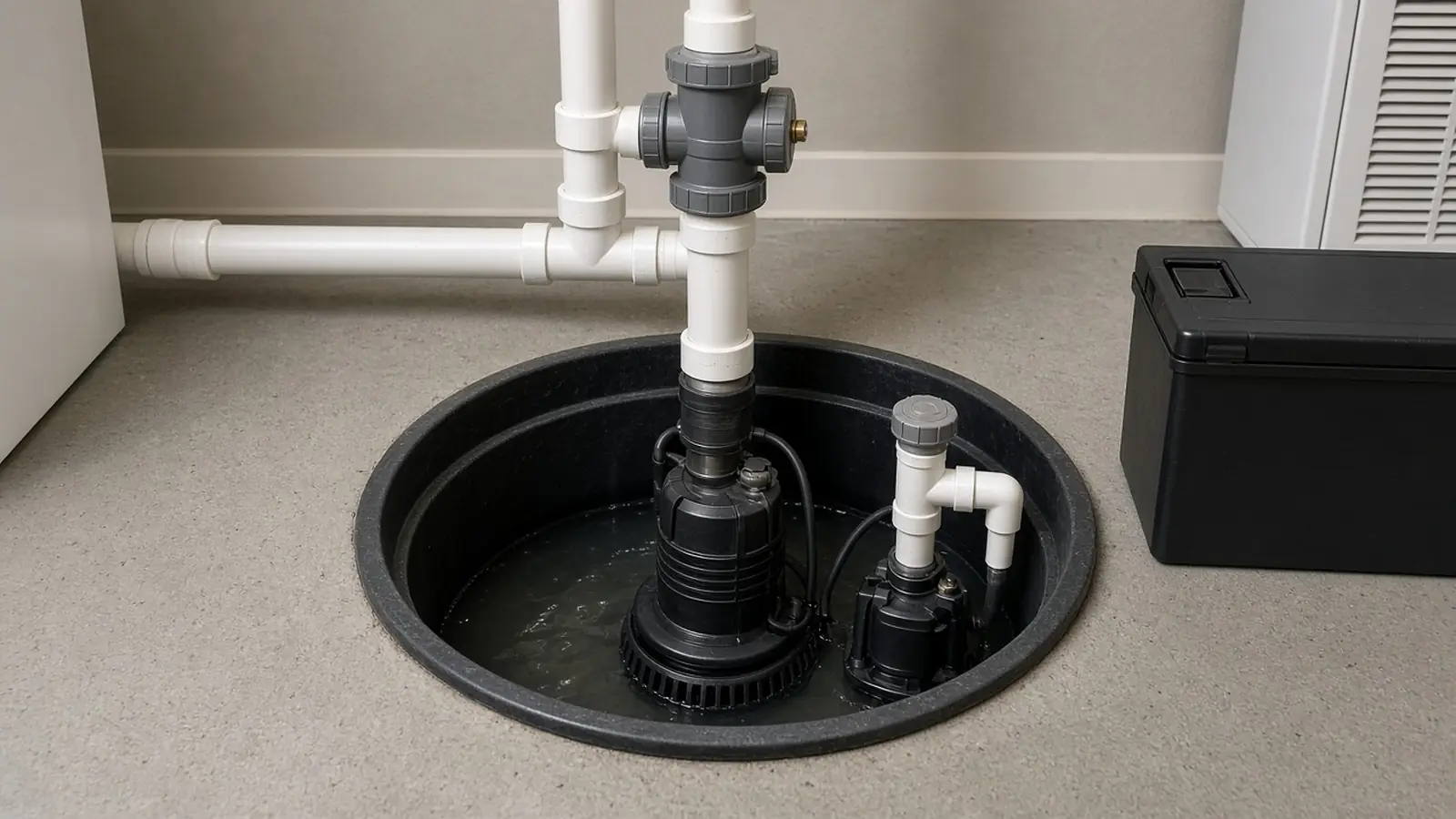
Sump pump installation in Rochester, NY means setting a sealed basin at the low point of your basement, connecting it to your drainage, and piping the water far enough from the foundation that it does not come right back in. Repair covers stuck floats, failed check valves, burned-out motors, frozen discharge lines and missing backups. Call our referral line (number coming soon) and we connect you with an independent local contractor that handles sump work in your area.
What does a sump system actually include?
People say "sump pump," but the system has several parts, and any of them can be the weak link:
- The basin or pit. A sealed plastic basin with a lid keeps debris out and humidity and soil gas down. Old clay-tile or open-hole pits are common in Rochester's older homes and often need replacing.
- The pump. Submersible pumps sit in the water and are quieter; pedestal pumps sit above it. Sizing depends on how much water comes in and how high it has to be lifted.
- The float switch. It turns the pump on and off. Tethered floats can tangle on the pit wall; vertical floats need a clear path.
- The check valve. It stops water in the discharge pipe from falling back into the pit every time the pump shuts off.
- The discharge line. It carries water outside. This is where most Rochester winter problems happen.
- The backup. A second pump, battery or water-powered, for power failures and primary pump failures.
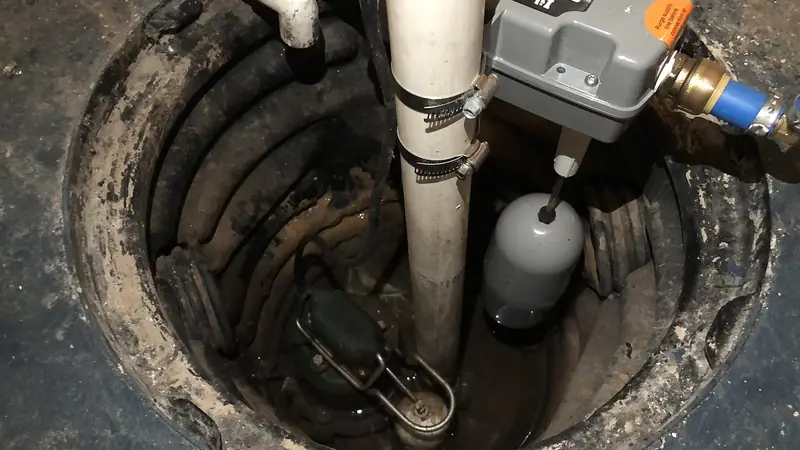
Why do Rochester sump pumps fail?
Most failures we hear about come down to a few local patterns. The first is the long spring run. When snowmelt soaks the ground in March and April, pumps in neighborhoods near the Genesee River, around Durand Eastman Park and along the lake in Charlotte near Ontario Beach Park may run every few minutes for weeks. That is a lot of wear on a motor and a float switch.
The second is cold. With well over a hundred nights a year at or below freezing, a discharge pipe that runs along the ground, sags, or ends in a short hose can freeze solid. The pump then pushes against a blocked line, overheats and quits, often during a midwinter thaw when water arrives fast. A contractor can bury the line below the frost zone, add a freeze-relief fitting near the house, or slope the line so it drains completely after each cycle.
The third is power. Wind and ice storms knock out power across the region, sometimes for days. A pump without backup is a pump that does not run when the basement needs it.
New installation or replacement?
If you have never had a sump and water comes in at the floor line, you may need a full interior drainage system feeding a new pit. If you already have a pit and pump, replacing the pump, check valve and float, adding a sealed lid and fixing the discharge is a much smaller job. When a basement has a wet spot at only one corner, a contractor may suggest a pit at that low point with a short section of drain.
Ask for the reason behind the pump size they recommend. Bigger is not always better; an oversized pump in a small pit can short-cycle and wear out faster.
Discharge rules in Monroe County
Water from a sump must not go into the sanitary sewer. The Monroe County Sewer Use Law bars groundwater, foundation drain and sump water from sanitary sewers without a permit. Sending it there overloads treatment plants and can cause sewage backups for you and your neighbors. Towns like Perinton say the same thing in their own guidance. The right outlet is usually the yard, a dry well, or a storm connection where your town allows it. We explain more in our guide to sump pump discharge rules in Monroe County.
Repair checklist before you call
Unplug the pump and plug it back in. Lift the float gently to see if the pump starts. Listen for a hum with no water moving, which can mean a jammed impeller. Check the discharge pipe outside for ice or a crushed end. If water is rising and the pump will not run, call quickly and move valuables up off the floor.
Homeowners in Webster and Penfield often ask about backups after a storm outage. If the pump is fine but walls are leaking, see wet basement and leak repair.
Questions homeowners ask
How often should a sump pump be replaced?
There is no fixed date. Many pumps last several years, but a pump that runs constantly during wet Rochester springs wears out sooner. Replace it if it hums without pumping, cycles on and off rapidly, runs with no water coming in, makes grinding noises or is old enough that you cannot remember when it went in.
Where can my sump pump discharge in Monroe County?
Not into the sanitary sewer. Monroe County's sewer use law prohibits discharging groundwater and foundation drain water into sanitary sewers without permission. Typical options are a discharge to the yard well away from the house, a dry well, or a storm sewer connection where your town allows one. Ask your town's public works office if you are unsure.
Do I need a battery backup sump pump?
If your basement floods when the pump stops, a backup is worth considering. Rochester storms and ice can knock power out exactly when the pump is needed, and primary pumps fail without warning. A backup can be a battery pump in the same pit or, in homes with city water pressure, a water-powered pump. Each has trade-offs to discuss.
Why does my sump pump run when it has not rained?
In spring the water table around many Rochester homes stays high long after the last storm, so the pump keeps running. It can also mean a stuck float, a failed check valve letting water fall back into the pit, or a discharge line draining back toward the house. A contractor can tell which.