
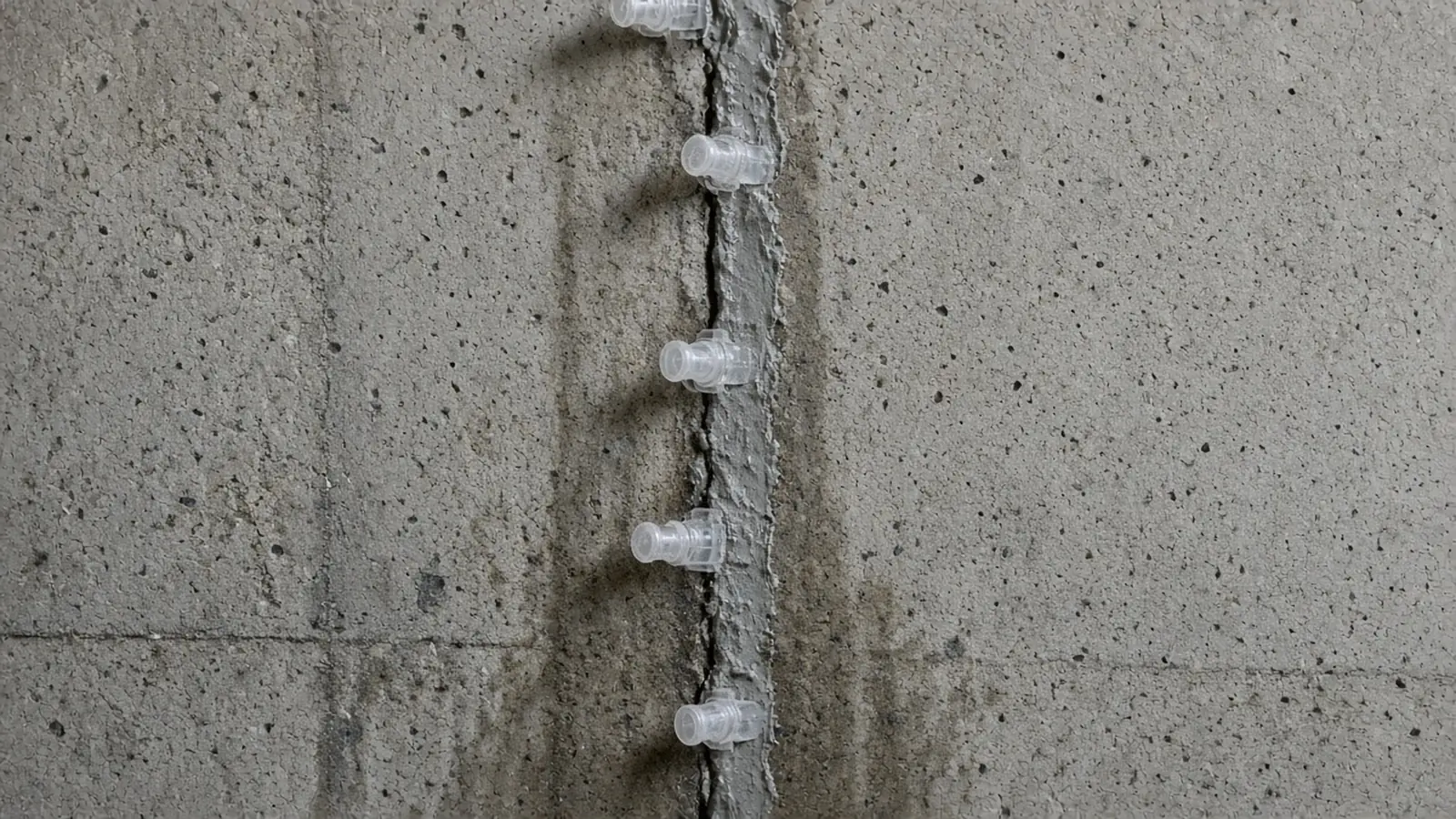
Foundation crack repair in Rochester, NY usually means injecting a leaking crack in a poured concrete wall with polyurethane or epoxy from the inside, so water cannot travel through it, and checking whether the crack is a sign of something bigger. Call our referral line (number coming soon) and we connect you with an independent local contractor that repairs foundation cracks in your town.
Why do Rochester foundations crack?
Concrete shrinks as it cures, and almost every poured wall develops a few hairline cracks in its first years. Those are not a defect on their own. What turns them into a problem in Monroe County is water and cold. Wet clay and silty soils expand when they freeze, and Rochester sees freeze-thaw cycles from November into April. Each cycle pushes on the wall a little, and water that gets into a crack can freeze and widen it.
Snow piled against the foundation is part of the story. After a lake-effect storm, plowed and shoveled snow ends up in long banks against the house. When it melts, that water soaks straight down along the wall, right where the cracks are. Homes on the slopes above the Genesee River gorge below High Falls and around Cobbs Hill, where water moves downhill through the soil, often show leaks at the uphill wall first.
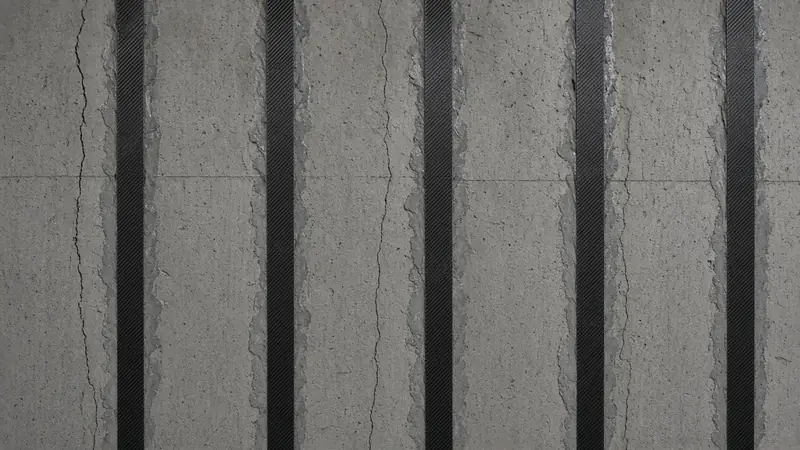
How does crack injection work?
- Clean and inspect. The contractor cleans the crack and checks its width, length and whether it goes all the way through.
- Set ports. Small injection ports are placed along the crack, and the surface is sealed with a paste so material cannot run out.
- Inject. Polyurethane or epoxy is pumped in from the bottom port up, filling the crack through the thickness of the wall until it shows at the next port.
- Cure and finish. After it cures, the ports can be cut off and the surface ground smooth.
When it is done well, injection fills the crack from the inside face to the soil side. That matters because a surface patch only covers the inside, and the water is coming from the outside. Injection works best on poured walls; block and stone walls leak through mortar joints and cores, which is a job for interior drainage or exterior waterproofing instead.
Cosmetic, leaking or structural?
It helps to sort cracks into three groups before anyone quotes:
- Cosmetic: hairline, dry, not growing. Watch it, mark the ends with a pencil and date, and check again after winter.
- Leaking: water or efflorescence along the crack, especially after rain or snowmelt. Injection is the usual fix.
- Structural: horizontal cracks in block, stair-step cracks, walls leaning inward, offsets, or cracks that keep growing. These need a structural evaluation. See bowing basement wall repair.
Structural repairs in the City of Rochester generally need a building permit; the city's building permits page lists structural repairs among the work that requires one. Surrounding towns run their own building departments, so ask your contractor who handles the permit where you live.
Floor cracks
Cracks in the basement slab are common too. Water coming up through a floor crack, especially in spring, usually means water pressure under the slab rather than a problem with the floor itself. Sealing the crack may just move the water somewhere else. The better fix is often a drain that relieves the pressure.
What to ask a contractor
Ask whether they will use polyurethane or epoxy and why, whether they inject the full depth, how many ports they set, and what happens if the same crack leaks again. Ask whether they see any signs of movement that need an engineer. Get it in writing, with the warranty terms, before work starts.
Homeowners in Brighton and Pittsford, where many 1950s and 1960s homes have poured walls, call about crack leaks often. For why winter does so much damage, read freeze-thaw and foundation cracks in Rochester.
Questions homeowners ask
Are vertical cracks in a basement wall normal?
Thin vertical or slightly diagonal cracks in poured concrete walls are very common and usually come from shrinkage as the concrete cured. They are typically not structural, but they can leak. Cracks that are wider at one end, offset so one side sticks out, or keep growing deserve a closer look.
What is the difference between epoxy and polyurethane crack injection?
Polyurethane foam expands to fill the crack and stays flexible, which makes it a common choice for stopping leaks in cracks that may move a little with the seasons. Epoxy cures hard and bonds the concrete back together, which is used when restoring strength matters. Some contractors use one or the other depending on the crack.
Can I fix a leaking foundation crack myself?
Surface patching from the inside rarely holds, because water pressure pushes from the outside and lifts the patch. DIY injection kits exist, but results depend on cleaning the crack, port spacing and getting material all the way through the wall. For a crack that leaks every spring, professional injection is usually more reliable.
When is a basement crack a structural problem?
Horizontal cracks in block walls, stair-step cracks through mortar joints, walls leaning inward, cracks wider than about a quarter inch, and cracks where one side has shifted out of plane can indicate soil pressure or settlement. Those call for a structural evaluation before sealing, and sometimes an engineer.