
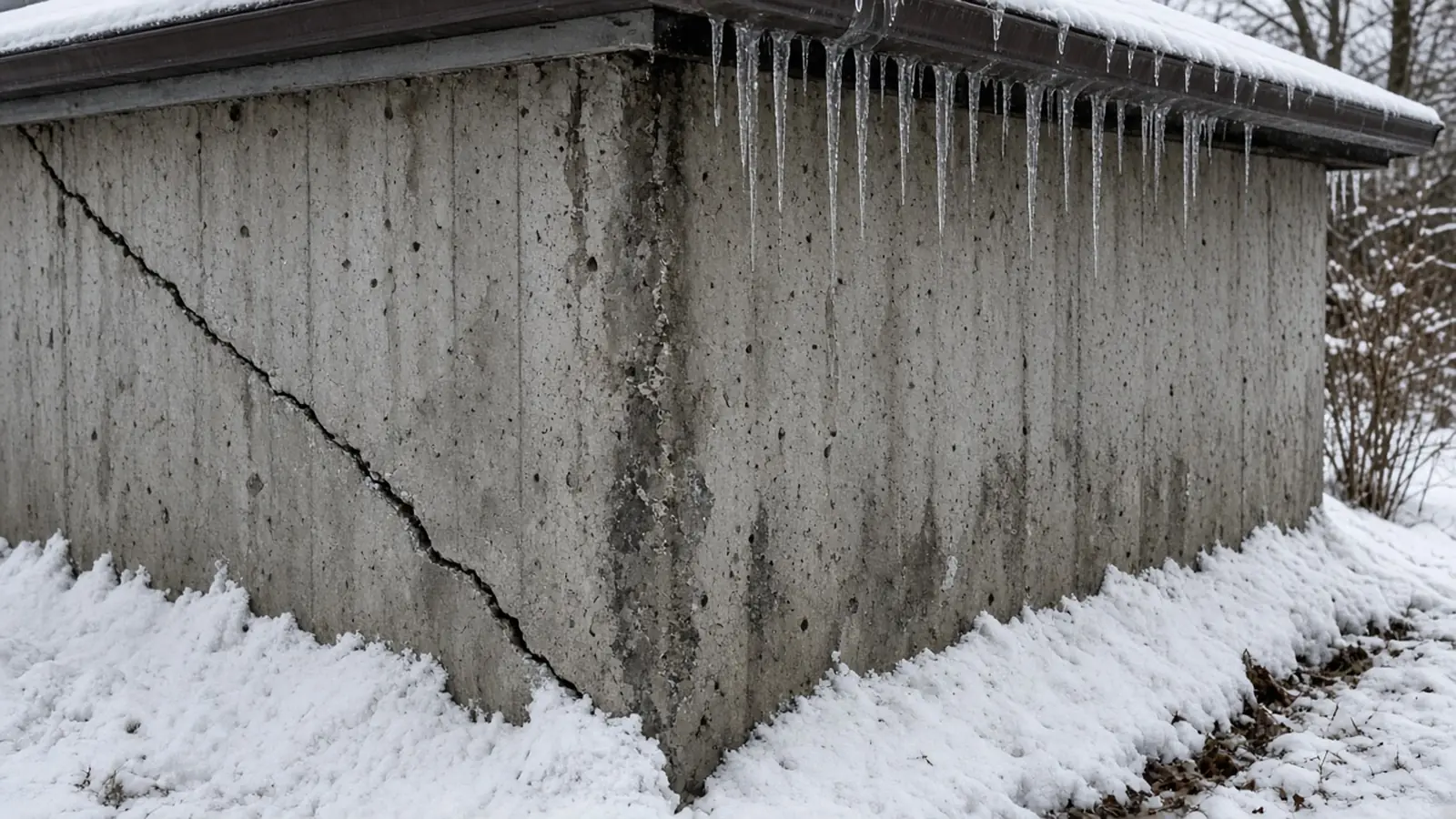
Freeze-thaw cycles damage foundations two ways: water in cracks expands when it freezes and widens them, and saturated soil that freezes against the wall expands and pushes on it. In a Rochester winter, with well over a hundred nights a year at or below freezing and many thaws in between, those small pushes add up, especially on block walls and on cracks that already leak.
How often does Rochester freeze and thaw?
NOAA's 1991–2020 normals for the Rochester airport count about 129 days a year with a minimum temperature at or below freezing, and about 45 days when the high never gets above freezing. That leaves a lot of days that cross 32°F, freezing at night and thawing in the afternoon sun, from November through April. Each crossing is a chance for water near the foundation to freeze and expand.
What happens to a crack
A shrinkage crack in a poured wall is often harmless at first. But if water gets into it, from rain, snowmelt or a downspout nearby, that water can freeze in the crack and push it slightly wider. Next time, more water gets in. Over years, a hairline crack can become a leaking one. The fix for a leaking crack is usually injection, which fills it through the wall's thickness.
What happens to a wall
Soil around a foundation holds water, especially clay and silt soils common in Monroe County. When that wet soil freezes, it expands. Most of the force goes upward, but some pushes sideways against the wall. Block walls are much weaker sideways than poured walls, and over many winters the push can cause a horizontal crack a few courses down, stair-step cracks at the corners, or inward bowing. Those are signs for bowing wall repair, usually with an engineer's input.
Where it shows up
You see freeze-thaw damage most where water collects: under downspouts, along driveways that drain toward the house, where snow is piled against the foundation all winter, and on the uphill side of sloped lots. Homes on the slopes above the Genesee River gorge and around Cobbs Hill Park often show it on the uphill wall. Walls facing a plowed driveway get a winter's worth of piled snow.
Reduce the risk
- Keep water away. Extend downspouts, fix grading and clean gutters. See downspouts and grading for a drier basement.
- Move snow away from the foundation when you can.
- Seal leaking cracks before winter so less water gets in.
- Improve drainage. Working footing drains or an interior drain reduce how wet the soil against the wall stays.
Monitor and decide
Mark crack ends with a pencil and date, measure widths, and photograph them in fall and again in spring. Most cracks will change a little with the seasons. A crack that keeps growing, offsets, or is horizontal in a block wall needs a professional evaluation. For structural repairs in the city, the City of Rochester building permits page lists when a permit is needed; towns have their own offices.
For the spring side of the story, read why Rochester basements leak during the spring thaw. For choosing who to hire, see questions to ask a waterproofing contractor in New York.
Questions homeowners ask
Do foundation cracks get worse in winter?
They can. Water in a crack expands when it freezes and can widen it slightly, and frozen, saturated soil pushes harder on the wall. Many cracks open a little in winter and close in summer. A crack that keeps getting wider year after year, or offsets, needs a closer look.
How can I tell if a crack is moving?
Mark both ends of the crack with a pencil line and the date, and measure its width at a few points. Photograph it with a ruler. Check again after a season. If the crack grows past your marks or gets wider, it is moving.