
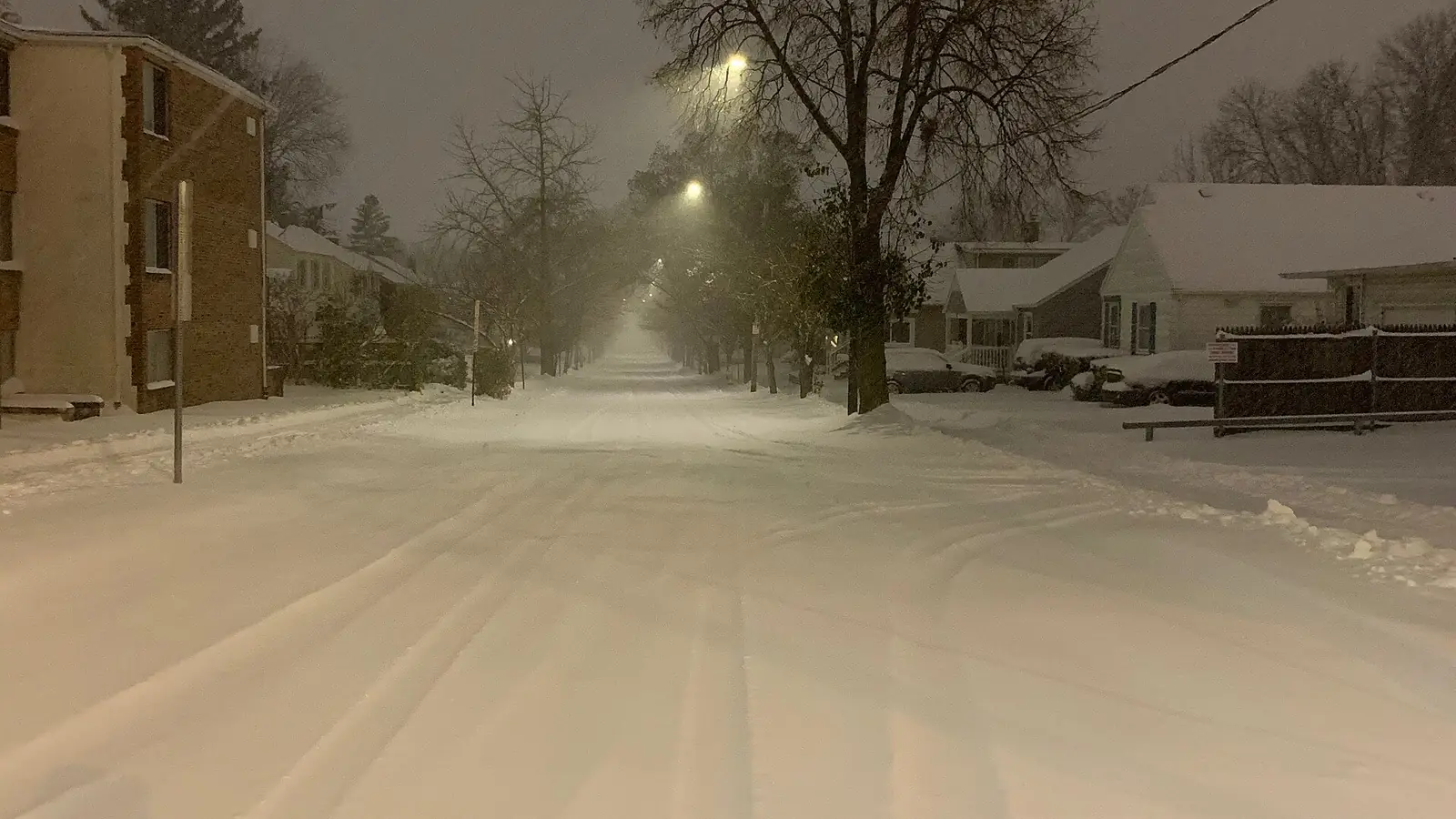
Rochester basements leak in spring because months of snow melt into soil that is still frozen underneath, so the water cannot drain down and instead builds pressure against the foundation, pushing through the cove joint, cracks and block walls. Short downspouts, poor grading and old footing drains make it worse. Here is what is going on, and what helps.
How much water are we talking about?
NOAA's 1991–2020 climate normals put Rochester's average seasonal snowfall at about 102 inches at the airport, with January alone averaging more than 27 inches. The National Weather Service office in Buffalo forecasts the lake-effect bands that can drop far more on one neighborhood than another. When the thaw comes, all that snow, plus whatever is piled in plow banks against the house, turns into water around your foundation, often over just a few warm days with rain on top.
Why frozen ground matters
In summer, rain soaks down through the soil and away. In March, the top layer thaws first while the ground below stays frozen. The melted water has nowhere to go but sideways, along the frost layer, toward the warmest and easiest path, which is often the backfill around your basement. That loose fill around foundations takes on water like a moat.
Once the soil around the wall is saturated, water presses on the wall and up under the slab. This is hydrostatic pressure, and it explains why spring leaks show up at the same places every year:
- The cove joint, where the wall meets the floor.
- Block cores, which fill with water and leak out at the bottom course.
- Cracks in poured walls, which may stay dry all summer.
- Floor cracks and floor drains, when the water table rises under the slab.
Where it is worst in Rochester
Low neighborhoods near the Genesee River, homes near the lake in Charlotte and along the shore in Greece and Irondequoit, and houses at the bottom of slopes all see spring water first. Rochester's older housing matters too. In city neighborhoods like the South Wedge and around Highland Park, stone and early block foundations were never meant to be dry, and their original drainage is long gone.
What you can do before the thaw
- Extend downspouts. Carry roof water several feet from the foundation, farther if the yard is flat.
- Clear gutters after the leaves fall so melting snow on the roof drains properly.
- Move snow away from basement walls and window wells when you shovel or plow.
- Check the sump. Pour a bucket of water into the pit and make sure the pump starts and the discharge line outside is clear and not frozen.
- Raise belongings off the floor and out of cardboard boxes.
Our guide to downspouts and grading covers the outside steps in more detail.
When it is time for a bigger fix
If water comes in at the floor line around much of the basement every spring, the usual long-term answer is an interior perimeter drain and sump, which relieves the pressure under the slab. If a specific crack leaks, crack injection may solve it. If the sump runs constantly and has no backup, see sump pump installation and repair. For cracks that appear after winter, read freeze-thaw and foundation cracks in Rochester.
The best time to call is while the water is visible. A contractor can see exactly where it enters, which makes for a more accurate quote.
Questions homeowners ask
Why does my basement leak in spring but not in summer storms?
In spring, melting snow and rain arrive while the ground a short way down is still frozen, so water cannot drain away and builds pressure against the foundation. In summer, the soil drains freely and absorbs a storm faster, so only very heavy rain or poor grading causes leaks.
Is a spring-only leak worth fixing?
Usually, yes. Repeated wetting feeds mold on stored items and finishes, wears out block and mortar, and raises humidity for months. A leak that returns every March will not fix itself, and the cause is often something simple like a short downspout or a failed footing drain.