
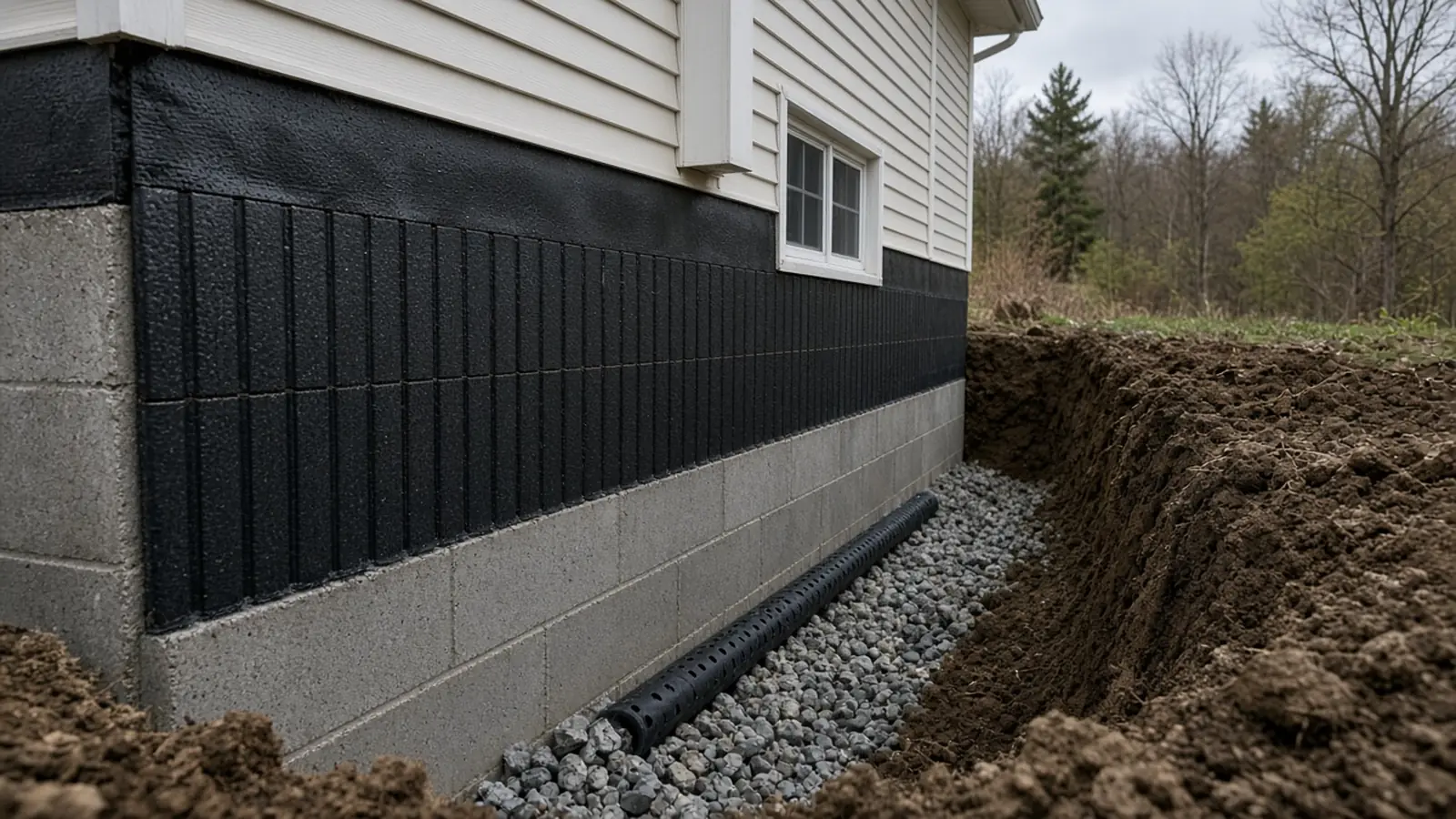
Exterior foundation waterproofing in Rochester, NY means digging down along the outside of the foundation to the footing, cleaning and repairing the wall, applying a waterproofing membrane and drainage board, laying new perforated footing drains in stone, and backfilling so water runs away from the house. Call our referral line (number coming soon) and we connect you with an independent local contractor that does exterior waterproofing in your area.
How is exterior waterproofing done?
- Locate utilities. The contractor calls 811 so gas, electric, water and cable lines are marked. Dig Safely New York handles requests for most of upstate.
- Excavate. Soil is removed along the wall, often by a small excavator, down to the footing.
- Clean and repair. The wall is cleaned, cracks and holes are repaired, and loose mortar on block is addressed.
- Membrane. A waterproofing membrane is applied to the outside face. Products vary from rubberized coatings to sheet membranes.
- Drainage board. A dimpled or composite board protects the membrane and lets water fall freely to the footing.
- Footing drain. New perforated pipe is set in washed stone beside the footing and led to daylight, a dry well or a sump.
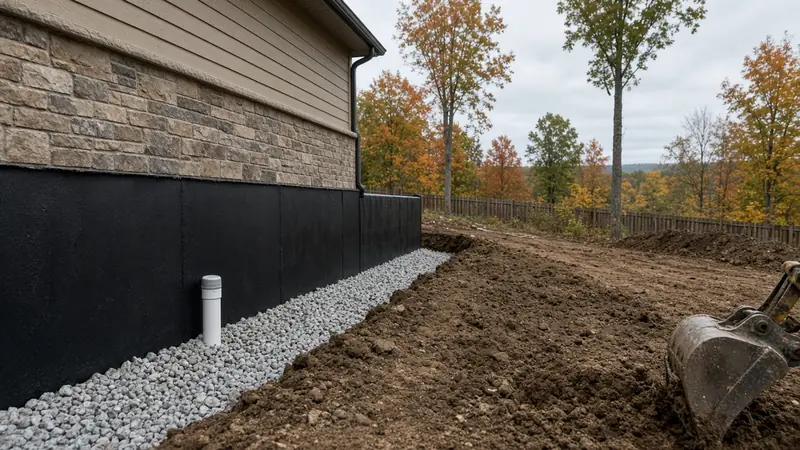
- Backfill and grade. The trench is filled, often with stone near the wall, and the soil is graded away from the house.
When does exterior waterproofing make sense?
It is usually considered when one or more of these apply:
- The original footing drain has failed. Many Monroe County homes from the 1950s through the 1970s were built with clay tile footing drains that can crack, clog with silt or be crushed by roots.
- You want a dry wall, not just a dry floor. Interior drainage manages water after it passes through the wall. Before finishing a basement with drywall, some owners prefer to stop the water outside.
- The wall needs exterior repair anyway. If a wall is being straightened or reinforced from outside, adding a membrane at the same time makes sense.
- Interior access is poor. Finished basements, built-in cabinets or mechanical equipment along a wall can make an interior drain harder.
For most of the city's older homes, packed tight on lots in neighborhoods like the 19th Ward, Swillburg and North Winton Village, excavating between houses can be hard, and the owners usually go with interior drainage instead. In suburbs with more room, exterior work on one problem wall is common.
Location changes the job, too. Near the lake, from the Charlotte streets around Ontario Beach Park east to the hills by Durand Eastman Park, crews often hit wet sand or a high water table a few feet down, so the excavation may need pumping and the new drain tile needs a reliable outlet. In the clay soils common farther inland, the dig stays drier, but backfill has to be free-draining stone or the old problem comes back. Ask the contractor what they expect to find when they dig at your address.
Rochester weather and timing
Rochester's ground freezes in winter and gets saturated by snowmelt in spring, so the outdoor season for excavation is mostly late spring through fall. Contractors book up after a wet spring. If water came in during the March thaw, that is a good time to get inspections and quotes, so work can be scheduled once the ground dries out. During the job, a heavy summer storm can fill an open trench; ask how the contractor protects the excavation and the basement in the meantime.
Questions to ask before you sign
Ask which walls will be dug and how deep, what membrane and drainage board they use, where the footing drain will discharge, how they handle window wells, steps and downspouts in the dig area, and what restoration is included. Ask about permits. In the City of Rochester, structural repairs need a permit, and towns have their own rules. New York also requires a written home improvement contract for jobs over $500, with a payment schedule and cancellation notice.
Exterior work is often paired with bowing basement wall repair when a block wall has moved, or with new egress windows and window wells when the dig is already open. Homeowners in Penfield and Fairport and Perinton often ask about exterior work on one wall. For a full comparison, read interior vs. exterior waterproofing for Rochester homes.
Questions homeowners ask
Is exterior waterproofing worth the cost?
It can be when you want the wall itself kept dry, for example before finishing a basement, when the footing drain has failed, or when wall seepage is severe. It is more disruptive and usually costs more than interior drainage because of excavation, restoration and access. Compare both approaches with the same contractor so you see the trade-offs for your house.
Can exterior waterproofing be done in winter in Rochester?
It is possible but harder. Frozen ground is difficult to dig, membranes have temperature limits, and backfill should not be frozen soil. Many contractors schedule exterior jobs from late spring through fall. Interior work can be done in any season.
What happens to my landscaping and driveway?
The soil along the wall being waterproofed has to come out, so plantings, walkways, decks, steps and sometimes part of a driveway in that strip may need to be removed and restored. Ask exactly what is included in restoration, who handles it, and what is left for you to replace.
Do I need to call 811 before excavation?
Yes. New York requires notice to the one-call center before digging so that buried utilities are marked. Your contractor should place the request through 811 or Dig Safely New York and wait for the markings before excavating near the foundation.