
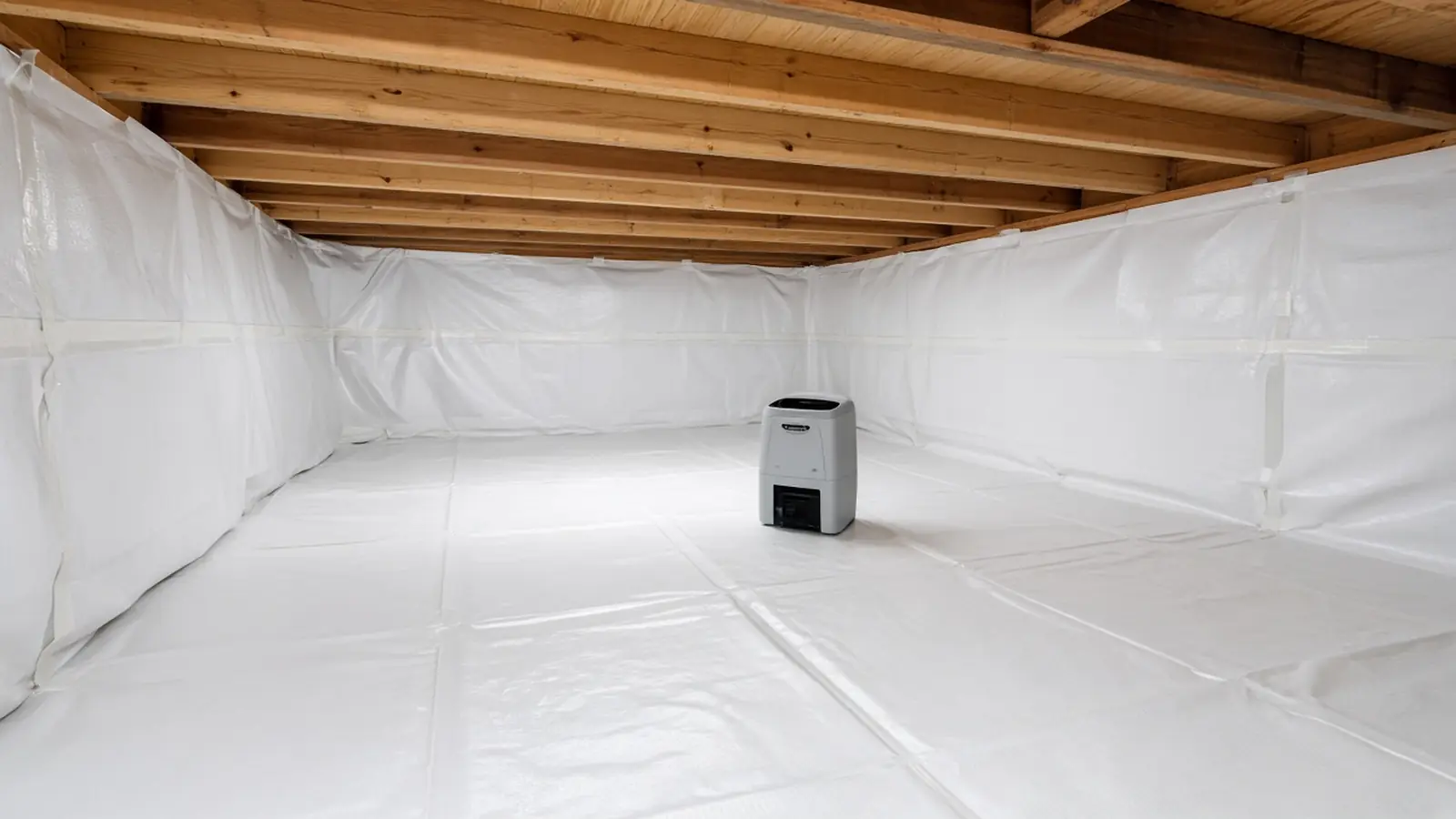
Crawl space encapsulation in Rochester, NY means sealing a damp crawl space with a heavy vapor barrier on the floor and walls, closing off or managing outside air, fixing any standing water, and keeping humidity down so the space stays dry and does not send moisture and musty air into the house. Call our referral line (number coming soon) and we connect you with an independent local contractor that encapsulates crawl spaces in your area.
Why do Rochester crawl spaces get damp?
Rochester's climate is hard on crawl spaces in two seasons. In spring, snowmelt and rain saturate the soil, and a dirt or gravel crawl space floor releases a lot of moisture into the air above it. In summer, warm, humid air flows in through vents and hits cool crawl space surfaces, where it can condense on ducts, pipes and the underside of the floor. The result is wet insulation, rusty fasteners, mold on joists and a smell that drifts into the rooms above.
You see crawl spaces most often under additions, sunrooms and back kitchens on older homes in the city, from the Park Avenue area to the streets near Seneca Park, and under some ranch and split-level homes in the suburbs. They are easy to forget about because nobody goes down there.
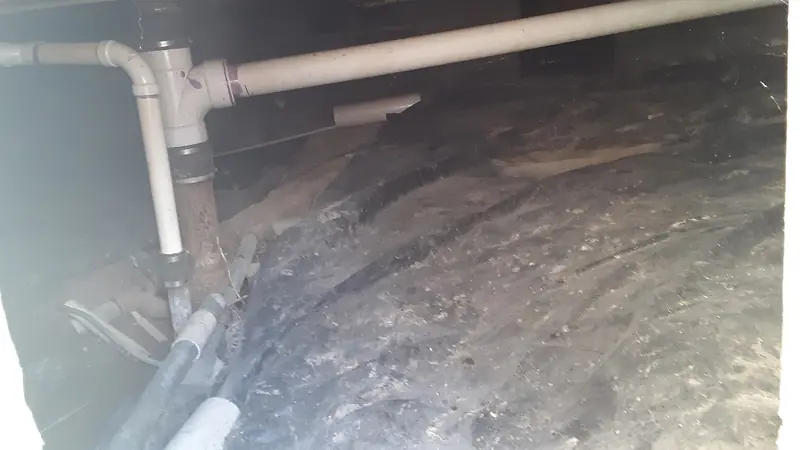
What does encapsulation include?
- Inspection. The contractor checks for standing water, wood rot, mold, pests, insulation condition, vents and any combustion appliances.
- Water first. If water pools on the floor, it is handled with grading, downspout changes, or a small drain and sump. See interior drainage for how those systems work.
- Cleanup. Debris, old plastic and wet insulation are removed. Moldy wood may be cleaned or treated.
- Vapor barrier. A thick, reinforced liner covers the floor and runs up the walls, with seams taped and edges sealed to the foundation.
- Air sealing. Vents and rim joist gaps are sealed where the design calls for it. Insulation may move from the floor above to the crawl space walls.
- Humidity control. A dehumidifier sized for the space, or a small supply of conditioned air from the house, keeps relative humidity in check.
Encapsulation is not a vapor barrier alone
A thin sheet of plastic thrown over the dirt is not encapsulation. It slows evaporation from the ground, but it does not seal the space, does not deal with humid air coming through vents, and does not hold up to people crawling over it. If you are comparing quotes, ask about liner thickness, how seams and edges are sealed, what happens with the vents, and how humidity is controlled after the job.
Radon, moisture and air quality
Air from a crawl space moves up into the living space through gaps in the floor, around pipes and through ductwork. That is why a damp crawl space can affect how the whole house smells and feels. It is also why crawl spaces matter for radon. The EPA recommends testing for radon in all homes, and a sealed liner with a vent fan is a common mitigation design for crawl spaces. Test before and after any major foundation work.
Questions to ask
Ask whether the contractor will handle water first, what the liner is made of, whether they will close vents and why, what dehumidifier they use and who maintains it, whether insulation is being moved, and whether they check for radon or combustion safety. Ask what the warranty covers.
Many crawl space calls come from homeowners in Brighton and Webster, where additions and older homes share foundations. If the main basement also leaks, start with wet basement and leak repair. For summer humidity tips, read our guide to efflorescence and damp basement walls.
Also ask how the crawl space will be inspected later. A good encapsulation leaves a sealed access door, room to move and a way to check the liner, the drain and the dehumidifier once or twice a year.
Questions homeowners ask
What is crawl space encapsulation?
Encapsulation means covering the crawl space floor and walls with a heavy vapor barrier sealed at the seams and edges, closing or managing vents to the outside, and controlling humidity, usually with a dehumidifier or conditioned air. The aim is a dry, clean space that does not feed moisture and odors into the house.
Should crawl space vents be open or closed in Rochester?
Building science has shifted toward closing vents when a crawl space is properly sealed and conditioned, because humid summer air entering a cool crawl space can condense. In winter, open vents can let cold air freeze pipes. Whether to close vents depends on the whole design, including how the space is dried and whether combustion appliances are present.
Do I need drainage before encapsulating a crawl space?
If water pools on the crawl space floor after rain or snowmelt, yes. A vapor barrier is not designed to hold back standing water. A contractor may add a small perimeter drain and a sump, or fix grading and downspouts outside, before laying the liner.
Can encapsulation help with radon?
A sealed vapor barrier is often part of radon mitigation in homes with crawl spaces, combined with a vent pipe and fan that draws soil gas from under the liner. Encapsulation alone is not a radon system. Test first, and if levels are high, talk to a radon professional. The EPA has guidance on testing and mitigation.