
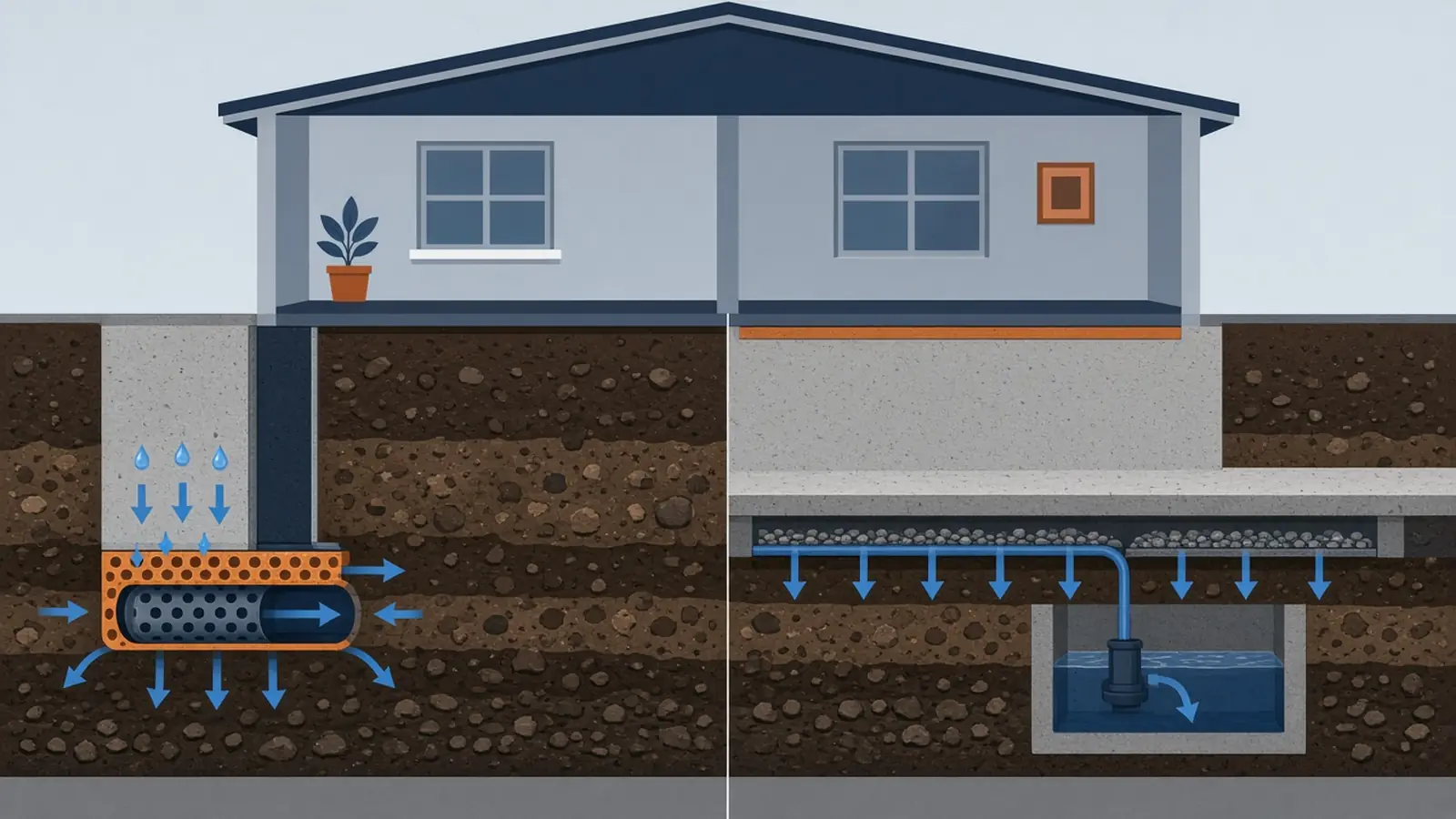
Interior waterproofing manages water after it passes through the wall, using a drain under the edge of the slab and a sump pump. Exterior waterproofing stops water at the outside face of the wall with excavation, a membrane and new footing drains. In Rochester, interior systems are more common because they work on old stone and block walls, can be installed in any season and avoid digging between closely spaced houses, but exterior work is the better fit in some situations.
How each one works
Interior. A strip of floor is removed around the perimeter, perforated pipe is laid in stone near the footing, weep holes may be drilled in block, a membrane can be added to the lower wall, and everything drains to a sealed sump that pumps water outside. See interior drainage and French drains.
Exterior. Soil is dug out along the wall to the footing. The wall is cleaned and repaired, a membrane and drainage board go on, a new footing drain is laid in stone, and the trench is backfilled and graded. See exterior foundation waterproofing.
Side by side
| Interior drainage | Exterior waterproofing | |
|---|---|---|
| Stops water | At the floor, after it passes the wall | At the outside of the wall |
| Wall stays dry? | Wall may stay damp; floor stays dry | Wall itself stays drier |
| Disruption | Inside the basement | Yard, plantings, walkways |
| Season | Any time | Best late spring to fall |
| Works on stone/block | Yes, very common | Possible, but old walls are harder |
| Tight city lots | Usually easy | Can be difficult |
| Needs a sump | Yes | Usually, unless drains daylight |
When interior makes sense in Rochester
Much of Rochester's housing sits on close lots, especially in city neighborhoods like the 19th Ward, Swillburg and the streets around Cobbs Hill, where driveways run within a few feet of the neighbor's house. Excavating there is hard. Old stone and block walls also leak through countless joints, so catching the water at the base of the wall is often more practical than sealing the outside. And interior work can happen in February, when exterior digging cannot.
When exterior makes sense
- You are finishing the basement and want the walls themselves dry.
- The original footing drain has failed on one side and there is room to dig.
- A wall needs exterior structural work, such as straightening or rebuilding a bowed block wall.
- Interior access is blocked by finished space or equipment.
- Water comes in high on the wall, not just at the floor.
Things that help either way
Neither system works well if the outside of the house sends water straight at the wall. Gutters, downspouts carried well away, grading that slopes away from the house and window wells with drains all reduce how much water any system has to handle. Read downspouts and grading for a drier basement.
Both approaches also need to respect the rules. In Monroe County, sump water cannot go into the sanitary sewer; see sump pump discharge rules in Monroe County. Exterior digging requires a call to 811 so Dig Safely New York can have utilities marked first.
Getting good quotes
Ask each contractor where they think the water is entering and why their approach addresses it. Compare the same scope: which walls, what drain, what membrane, where the sump goes, where it discharges, what restoration is included and what the warranty covers.
Questions homeowners ask
Which is cheaper, interior or exterior waterproofing?
Interior drainage is usually less expensive than exterior waterproofing for the same length of wall because it avoids excavation and landscape restoration. Costs vary a lot with access, wall type and how many walls need work, so get written quotes that spell out scope.
Can I do interior now and exterior later?
Yes. Some owners install interior drainage first to stop water at the floor, then do exterior work on a problem wall later, often when other exterior work like a new patio or egress window is happening. The two systems can work together.