
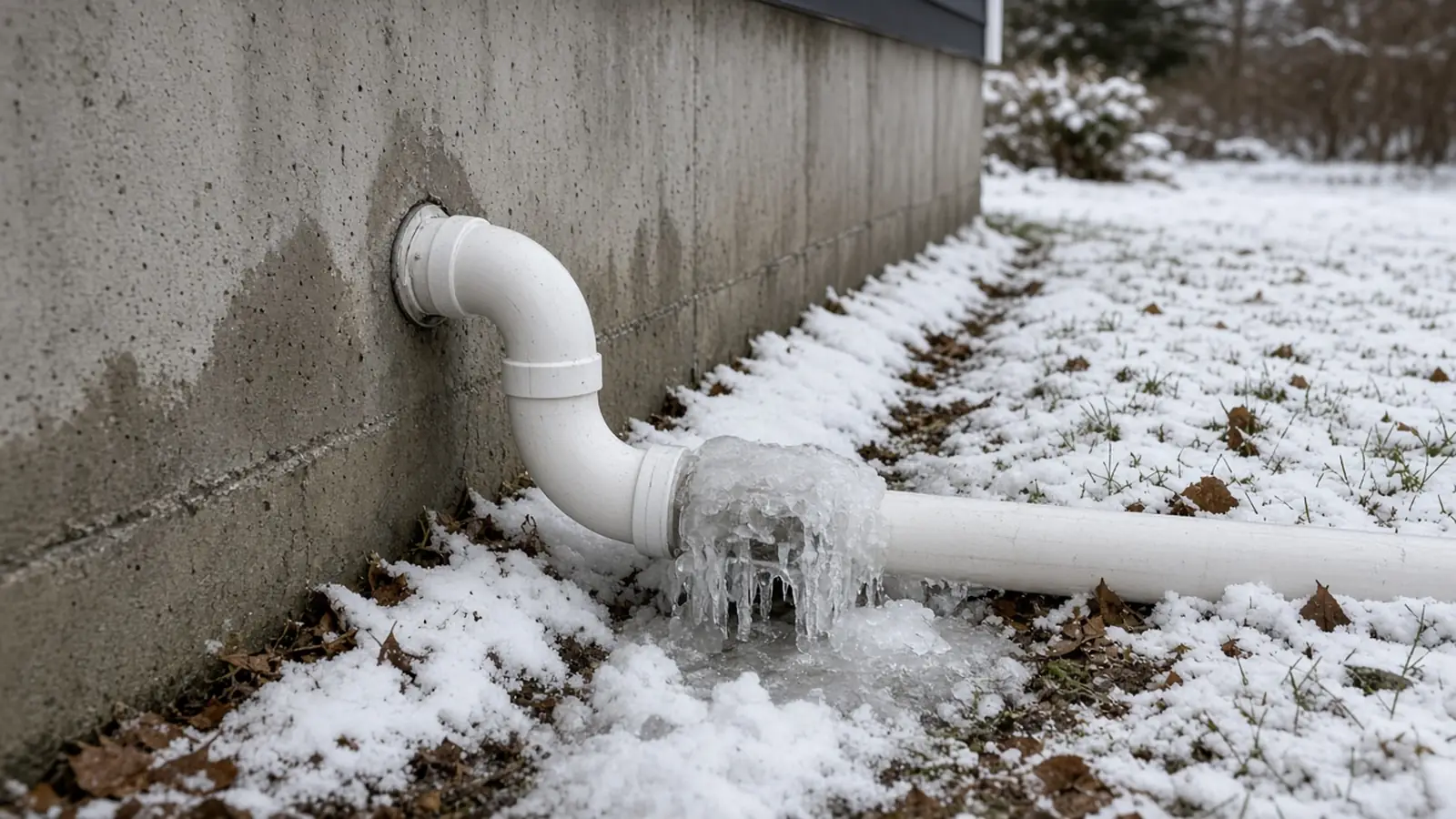
In Monroe County, a sump pump should discharge outside, to the yard, a dry well or a storm sewer connection where your town allows one, and not into the sanitary sewer. The county's sewer use law bars groundwater and foundation drain water from sanitary sewers without permission. The other half of the job is keeping that discharge line from freezing in a Rochester winter.
What the county rule says
The Monroe County Sewer Use Law defines "inflow" to include water from sump pumps, cellar drains, foundation drains and roof leaders. Article IV says users may not discharge unpolluted waters, including groundwater and subsurface drainage, into the sanitary sewer except with the Director's permission. Local governments are expected to enforce it.
Towns echo the rule. The Town of Perinton's sewer FAQ answers "Can my sump pump be connected to my sanitary sewer connection?" with a flat no: ground water must go to the storm sewer system.
Why it matters to you
Sanitary sewers carry wastewater to treatment plants like the county's Frank E. VanLare plant on the lakeshore in Irondequoit. They are not sized for the clear water that thousands of sump pumps push during a spring thaw. When too much clear water gets in, sewers can surcharge, and the result can be sewage backing up into basements, sometimes your own, and overflows to streams and the lake.
Where the water can go
- The yard. The most common outlet. Run the line far enough out and point it downhill, away from your foundation and your neighbor's.
- A dry well. A buried, gravel-filled pit or chamber that lets water soak in away from the house. Works best in soils that drain.
- A storm connection. Some towns allow or provide storm sewer connections for sump discharge. Ask your town's public works department before tying in.
- A curb outlet. Some municipalities allow discharge to the street gutter; others do not because of icing. Check locally.
Keeping the line from freezing
Rochester sees well over a hundred nights a year at or below freezing, and a frozen discharge line is a common cause of sump failure in January and February. The pump pushes against ice, overheats or quits, and a midwinter thaw floods the basement.
- Slope it. The line should drain completely after every cycle so no water sits in it.
- Bury it below the frost depth where practical, or use a larger pipe for the buried run.
- Add a freeze-relief fitting near the house, an opening that lets water escape if the line downstream is blocked.
- Avoid long hoses lying on the lawn, which freeze and get crushed by snow.
- Keep the outlet clear of snowbanks and ice.
If your pump drains into the house plumbing
Follow the pipe from the pump. If it ends at a floor drain, laundry tub or sewer pipe, it needs to be rerouted outside. That is usually a modest job: a new line through the rim joist or wall, a check valve and a proper outlet. A contractor who does sump pump installation and repair can handle it, and if the pit itself is fed by interior drainage, check that the system's discharge is done right too.
For outage protection, read sump pump backup options for Rochester storms, and for the outside of the house, see downspouts and grading for a drier basement.
Questions homeowners ask
Is it illegal to connect a sump pump to the sewer in Monroe County?
The Monroe County Sewer Use Law prohibits discharging unpolluted water, including groundwater and subsurface drainage, into the sanitary sewer without the Director's permission through a permit or written approval. In practice that means a typical sump pump should not drain into a floor drain, laundry sink or sewer pipe.
How far from the house should my sump discharge?
Far enough that the water does not run back toward the foundation. Many contractors aim for at least several feet, more on flat lots, and point the outlet toward a spot that slopes away from the house and does not flow onto a neighbor's property or a sidewalk where it can freeze.