
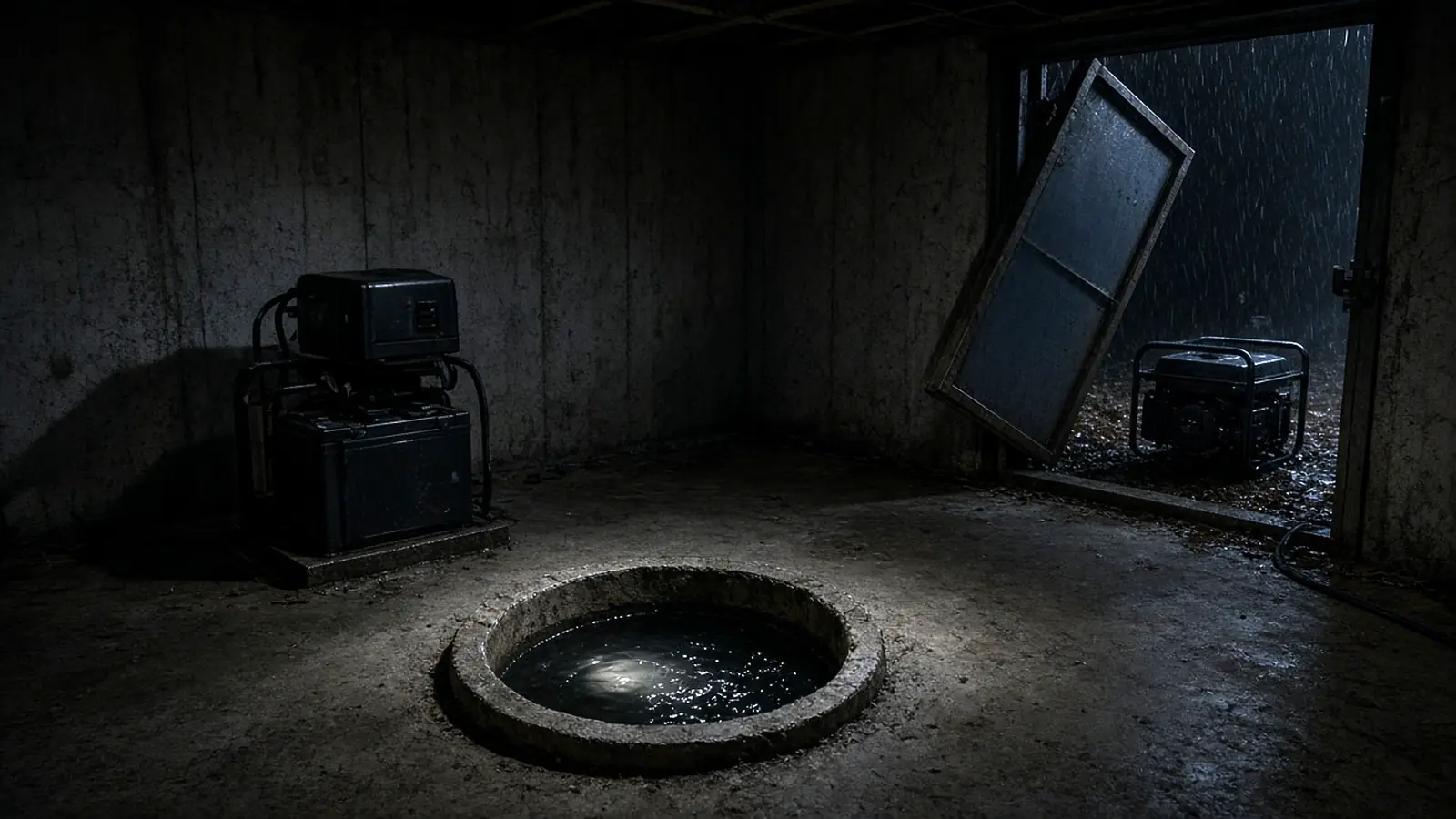
The three common sump pump backups are a battery-powered second pump in the same pit, a water-powered pump that uses city water pressure, and a generator that keeps the main pump running. In Rochester, where ice storms, wind and summer thunderstorms knock out power right when the ground is wettest, many homeowners with wet basements choose at least one.
Why backups matter here
A sump pump runs hardest during the same weather that cuts power. Spring thaws with heavy rain, late-winter ice storms and summer thunderstorms all hit Monroe County regularly, and outages can last hours or days. Primary pumps also fail on their own: a stuck float, a burned-out motor or a frozen discharge line. When a pump stops in a basement fed by an interior drain, water can rise over the floor surprisingly fast.
Homes near the lake in Charlotte, along the Genesee River and on low ground in towns like Gates and Chili tend to need backups most, because their pumps run the most.
Battery backup pumps
A second, smaller pump sits in the pit just above the main pump, with its own float, check valve and discharge connection. A charger keeps a deep-cycle battery ready. When water rises past the main pump's level, the backup kicks in.
- Pros: works during power outages and main pump failures; no fuel; automatic.
- Cons: limited run time; batteries need replacement every few years; capacity is usually lower than the main pump.
- Look for: an alarm, a battery sized for your inflow, and a pit large enough for both pumps.
Water-powered backups
These use municipal water pressure to create suction that pulls water from the pit and sends it out the discharge. No electricity is needed.
- Pros: runs as long as city water pressure holds; no battery to replace.
- Cons: uses potable water while running; requires adequate water pressure; needs a backflow preventer and correct plumbing; not for private wells.
Generators
A portable or standby generator can run the main pump, and the rest of the house, during an outage. Never run a portable generator indoors, in a garage or near windows, because of carbon monoxide. The Ready.gov power outage guidance covers generator safety. A transfer switch installed by an electrician is the safe way to connect one to house circuits.
Make the main system reliable first
A backup is only as good as the system around it. Make sure the pit has a sealed lid, the main pump is in good shape, the check valve works, and the discharge line will not freeze. Monroe County's sewer rules also apply to backup pumps: the water goes outside, not into the sanitary sewer. Read sump pump discharge rules in Monroe County.
Test it
Twice a year, before the spring thaw and before summer storm season, pour water into the pit to make sure the main pump starts, then unplug the main pump and test the backup. Check the battery date and the alarm.
For installation and repair, see sump pump installation and repair. If water reaches the pit from all around the floor, an interior drainage system may be feeding it. For lakeshore homes, read Lake Ontario high water and basements.
Questions homeowners ask
How long will a battery backup sump pump run?
It depends on the battery size, the pump and how often water comes in. A pump cycling occasionally may run much longer on one charge than a pump running constantly during a spring thaw. Ask the contractor for an estimate based on your pit's inflow, and consider a larger battery or a second battery for long outages.
Do water-powered sump backups work in Rochester?
They can in homes on municipal water with adequate pressure, because they use water pressure rather than electricity to move water out of the pit. They use city water while running, need a proper backflow device under plumbing code, and do not work on private wells or during water outages. A plumber can confirm your setup is suitable.