
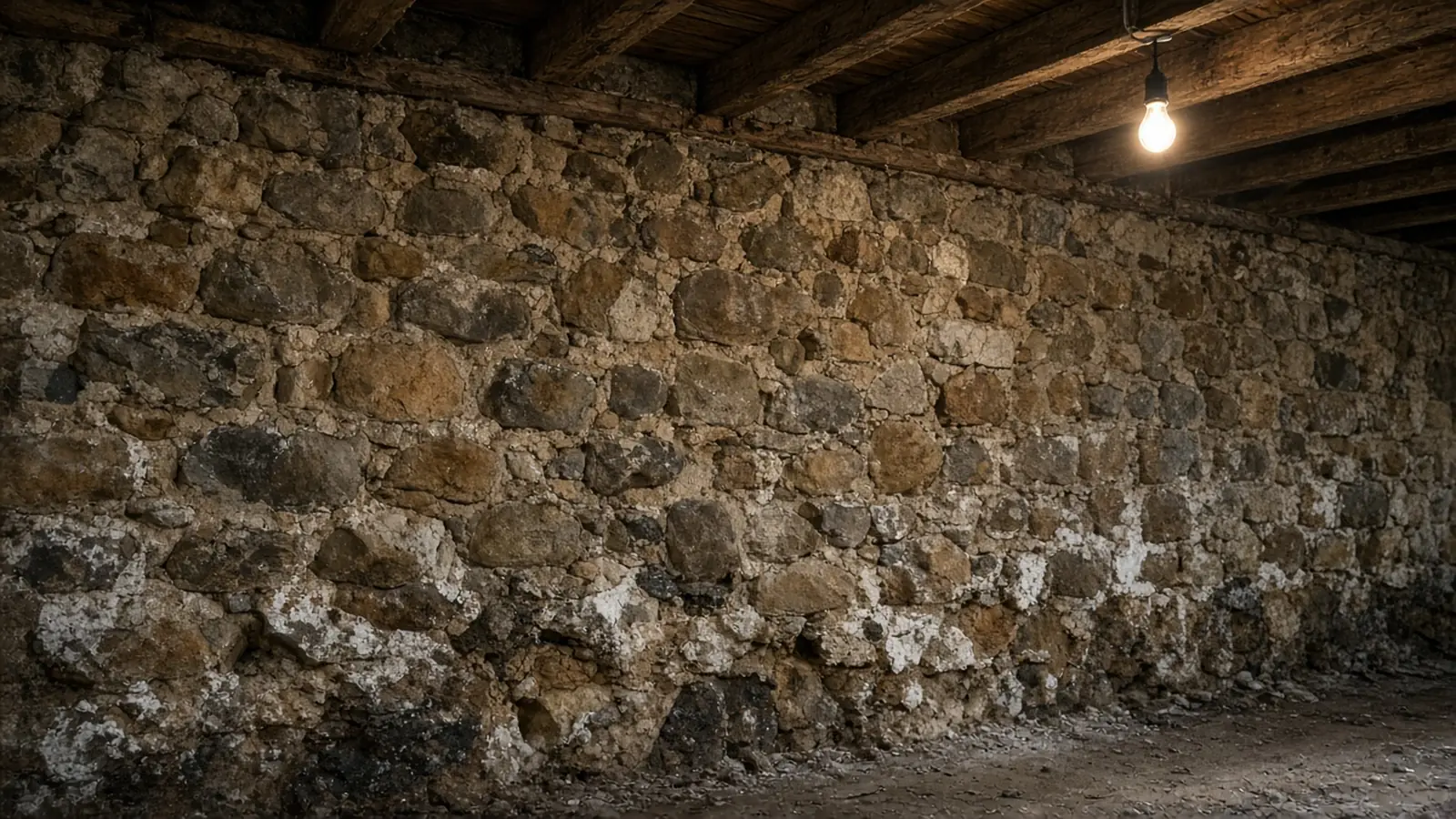
Waterproofing a fieldstone foundation in Rochester usually means keeping the basement floor dry and the walls sound rather than sealing the stone itself: managing water outside, repointing loose mortar with compatible materials, installing interior drainage at the base of the wall and controlling humidity. Thick waterproof coatings on old stone often make things worse.
Why Rochester has so many stone foundations
Census estimates show that more than half of the housing units in the City of Rochester were built in 1939 or earlier. Many of the oldest, from the canal and mill-town decades of the 1800s, sit on foundations of fieldstone or rough-cut stone laid in lime mortar. You find them in Corn Hill, the Third Ward, the neighborhoods around the old Erie Canal route, and older pockets of the suburbs and villages.

Why stone walls seep
A stone wall is not a solid barrier. It is hundreds of stones bedded in mortar, with gaps, voids and joints throughout. Lime mortar is softer than modern cement and lets moisture pass, which helps the wall dry out between wet periods. Over a century, freeze-thaw cycles and water washing through the joints wear that mortar away. During the spring thaw, water finds the open joints and the base of the wall and runs into the basement.
Signs you will recognize: sandy mortar crumbling onto the floor, white mineral deposits on the stones, damp patches that come and go with the seasons, and a wet floor along the base of the wall in March.
What works
- Outside water first. Gutters, downspouts carried well away, and grading that slopes away from the house reduce how much water reaches the wall. On tight city lots, even a few feet of downspout extension helps.
- Repointing. Rake out loose mortar and refill with a mortar compatible with the original, usually lime-based. Hard Portland cement mortars can damage soft stone and brick.
- Interior drainage. A perimeter drain along the base of the wall, often with a membrane on the lower wall, collects seepage and sends it to a sump. It is the most common approach on stone foundations because digging out the outside of an old wall between city houses is difficult. See interior drainage and French drains.
- Dehumidification. Stone walls stay cool and damp. A dehumidifier through the humid months keeps the space usable.
What to avoid
- Heavy waterproofing paint or coatings on the inside. Water pushes them off, and trapped moisture can speed mortar decay.
- Spray foam directly on stone without a plan for moisture.
- Finishing walls with drywall directly against stone. Leave an air gap, use moisture-tolerant materials, and make sure drainage is in place first.
If you see white powder on the walls, our guide to efflorescence on basement walls explains what it means.
Permits and historic districts
Interior drainage and repointing are usually straightforward, but structural repairs and exterior changes can need approval. The City of Rochester's building permits page notes that properties in a preservation district, or designated as a building of historic value, may need a Certificate of Appropriateness for certain work. Suburban towns and villages have their own rules.
Choosing a contractor
Ask whether they have worked on stone foundations, what mortar they use for repointing, how they attach a membrane to an irregular wall, and how they handle the footing, which on old homes may be minimal or missing. If the wall is bulging, ask about bowing wall repair. For a full hiring checklist, see questions to ask a waterproofing contractor in New York.
Questions homeowners ask
Can a fieldstone foundation be made completely waterproof?
Rarely, and trying can cause harm. Stone walls laid in lime mortar were built to let small amounts of moisture pass. The practical goal is a dry floor, sound mortar and controlled humidity, not a sealed wall. Interior drainage and good outside water management usually achieve that.
Should I parge or coat my stone basement walls?
A breathable lime-based parge can help protect mortar and smooth the wall. Thick, impermeable coatings on the inside tend to trap moisture, bubble and peel, and can speed up mortar decay. Ask a contractor who works on old foundations which materials they use.
Is a fieldstone foundation a structural risk?
Most stone foundations have stood for over a century and remain sound. Warning signs include stones falling out, large voids, bulging sections and serious mortar loss. Those call for repointing or repair by someone experienced with masonry foundations, and sometimes an engineer.